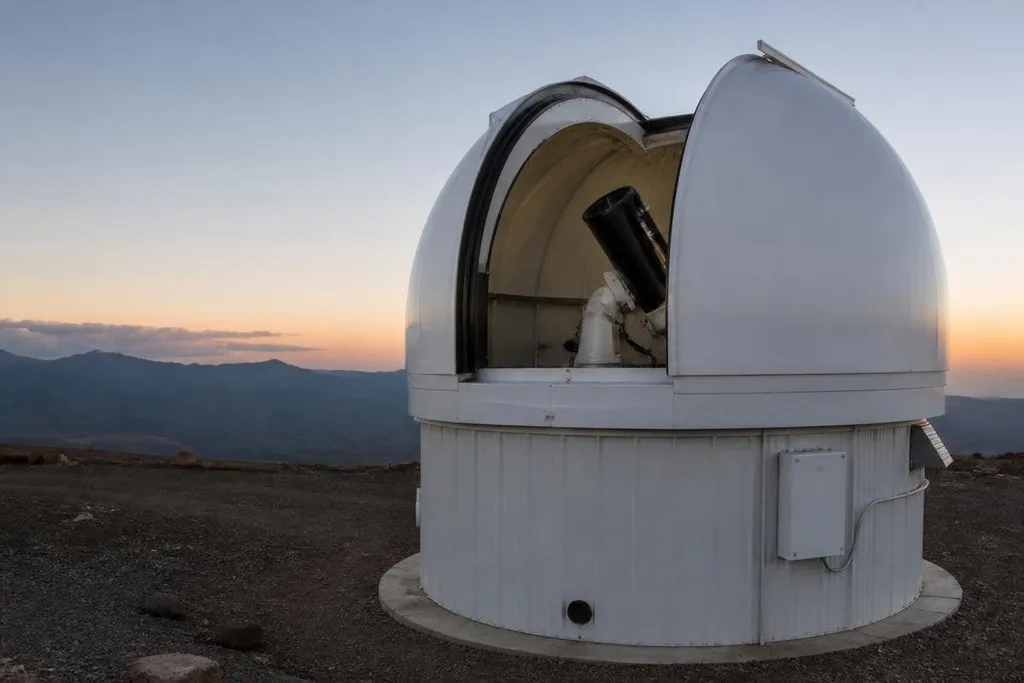
A robotic telescope can open its dome, point at a target, focus its camera, and record light without a person beside it. That matters because many astronomical events last for minutes, while a staffed observatory may be hours away from the right target.
This article looks at where robots could help, how the systems work, and what still needs a human decision.
- Robotic telescopes can repeat the same observation across many nights.
- Sensors and software can react when a star suddenly brightens or a new object appears.
- Weather, equipment faults, and poor instructions still stop autonomous systems.
Telescopes that respond while people sleep
Astronomy depends on timing. A supernova, a burst of radiation, or a passing asteroid can change before a research team finishes arranging an observation.
A robotic telescope can receive a target list, turn its mount toward the right part of the sky, and start an exposure without waiting for the next daytime shift.
An exposure is the period when a camera collects light. Several short exposures can show how an object changes, while a long exposure can reveal faint objects that are hard to see in a single frame. Software can also compare new images with older ones and flag a moving point or a sudden change in brightness.
That does not remove astronomers from the process. It moves their time toward deciding which alerts deserve closer study, then checking whether the result holds up across more observations.
More observations from the same telescope
Robots can repeat a task with the same pointing, focus setting, filter, and exposure plan. A filter blocks some colors of light, so switching filters helps astronomers measure how an object changes across the visible spectrum.
This repeatable work matters when a team needs a long record rather than one striking image. A telescope that checks the same patch of sky each night can help find objects that move, fade, or brighten. The system can also pause when clouds, high wind, or poor seeing make the data weak.
Some observatories use spectrographs as well as cameras. A spectrograph spreads light into its component colors, giving astronomers clues about an object's motion and the gases in or around it. A robot can place a target on the instrument, run the planned exposure, and store the result for later review.
The useful test is repeatability: can the robot place a target the same way across a full observing night? Robot24.com reports can help you follow the machine, task, and test before the work moves from observatory floors to space.
Robots in space and on the ground
Space robots can inspect hardware, move instruments, or collect samples where direct human work would be difficult. On Earth, robotic observatories can operate in cold, remote places and reduce the need for a person to travel each time a new observation comes in.
The useful part is the connection between sensing and action. A camera or weather sensor gathers new data, software checks set limits, and the telescope responds by changing its target or ending the observation. That loop can run many times in one night, but it needs clear rules for unsafe or uncertain cases.
Ground systems still face practical limits. Clouds can arrive after an observation starts. A motor can lose its position. A camera can produce bad data, while a network fault can leave the telescope waiting for a command. A human team needs safe recovery steps and a record of what the system did.
What to check before using a robotic telescope
A research team deciding whether to automate a task should check these points:
- Target timing: Can the system reach the object before the useful observation window closes?
- Weather limits: Does it stop safely for clouds, wind, rain, or poor seeing?
- Data checks: Can it flag blurred images, missing files, and sensor faults?
- Recovery plan: Can a person regain control when software or hardware stops?
- Repeat value: Will repeated observations answer a real astronomy question?
Automation works best when the task has clear rules and a useful stream of repeat observations. A robot should not decide that a rare event matters more than the astronomer who set the research goal.
I’d trust robotic astronomy first with routine observations and fast alerts, where speed and repeat work matter more than judgment.
The next test is simple: can these systems collect clean data through a full observing season, while recording every failure clearly enough for a human to check?